
A Complete Guide to Industrial Water Softening Systems
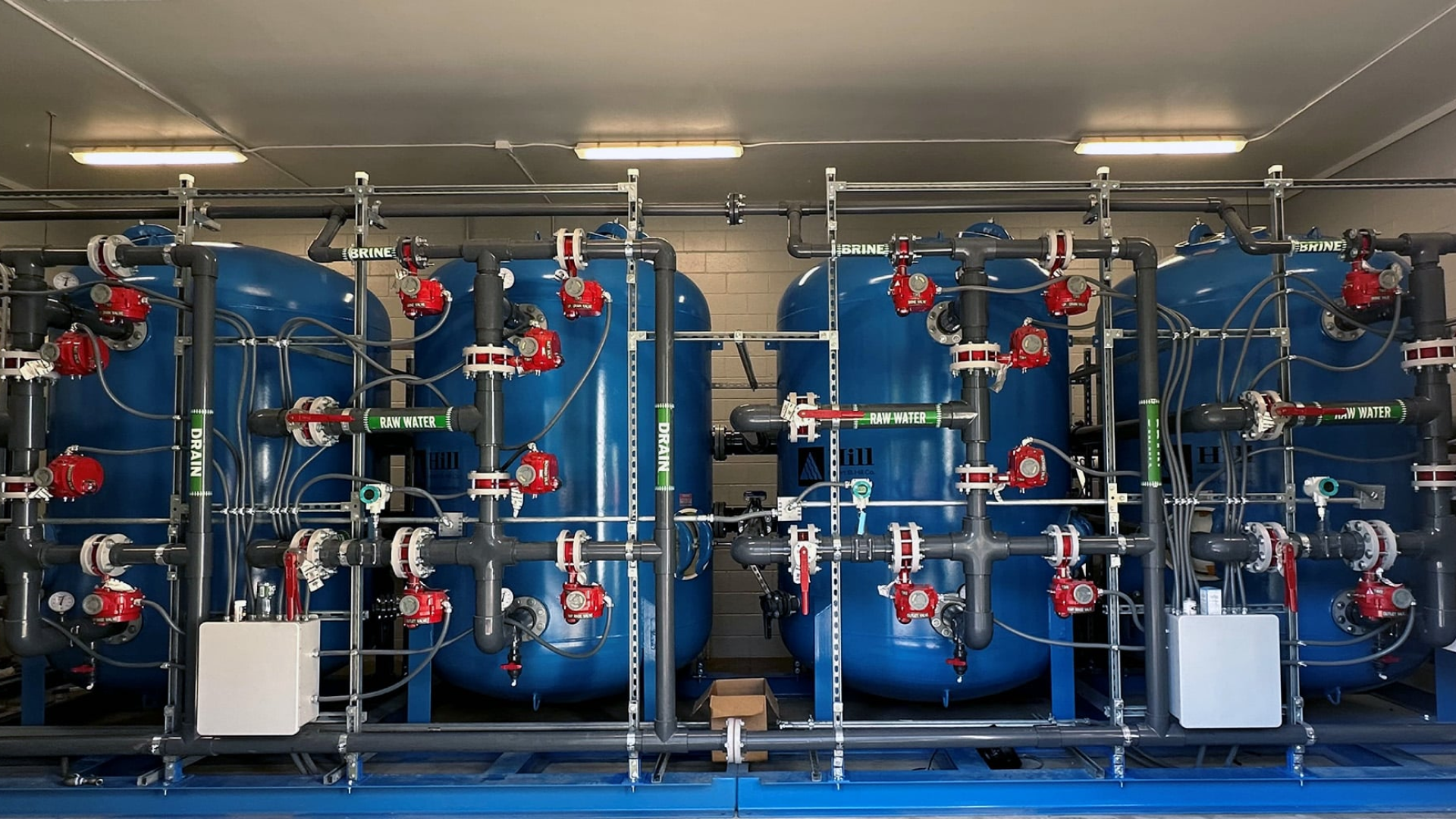
Water is a critical resource in nearly every industrial operation, but not all water is suitable for industrial use. One of the most common challenges manufacturers, commercial facilities, and utility operators face is hard water. High concentrations of calcium and magnesium can reduce equipment efficiency, increase maintenance costs, and shorten the lifespan of critical assets.
Industrial water softening systems are designed to solve this problem by removing hardness minerals before they affect boilers, cooling towers, process equipment, and production lines. When integrated into a comprehensive industrial water treatment strategy, water softeners help improve operational efficiency, reduce downtime, and support long term sustainability.
Whether your facility operates in manufacturing, food processing, pharmaceuticals, hospitality, or municipal infrastructure, understanding how industrial water softening works can help you make better decisions about your water management strategy.
What Is an Industrial Water Softening System?
An industrial water softening system is a water treatment solution that removes hardness minerals, primarily calcium and magnesium, from water before it is used in industrial processes.
Hard water may not appear harmful, but over time, it can create mineral deposits that interfere with equipment performance and increase operating costs.
Most industrial water softeners use an ion exchange process, replacing hardness minerals with sodium or potassium ions. The treated water helps protect equipment while improving the efficiency of downstream water purification systems.
Industrial water softening systems are often installed as a pretreatment step before:
Water purification systems
Why Water Hardness Matters in Industrial Operations
Hard water affects far more than cleaning performance. In industrial environments, it can reduce heat transfer, increase energy consumption, and contribute to equipment failures.
Common problems caused by hard water include:
Scale buildup inside boilers
Reduced cooling tower efficiency
Clogged pipes and valves
Poor heat transfer
Increased chemical consumption
Frequent equipment maintenance
Higher energy costs
Reduced equipment lifespan
For facilities that rely on consistent production, even a small amount of scale can have a noticeable impact on performance.
How Industrial Water Softening Systems Work
The most widely used softening technology is ion exchange.
During this process, hard water passes through a resin bed that contains sodium or potassium ions. As water flows through the resin, calcium and magnesium ions are exchanged, leaving softened water ready for industrial use.
Once the resin reaches its capacity, the system undergoes regeneration using a salt solution. This process restores the resin and prepares it for another treatment cycle.
Modern systems often automate regeneration to ensure consistent water quality and minimize operational interruptions.
Signs Your Facility May Need a Water Softening System
Not every industrial facility has the same water quality challenges, but several warning signs indicate that water softening may be necessary.
These include:
Frequent scale buildup on equipment
Declining boiler efficiency
Excessive maintenance costs
Higher fuel or energy consumption
Reduced cooling tower performance
Mineral deposits inside piping
Shortened equipment life
Increased chemical treatment requirements
A comprehensive water analysis is the best way to determine whether hardness is affecting your operation.
Key Components of an Industrial Water Softening System
Resin Tank
The resin tank contains the ion exchange media responsible for removing hardness minerals. The size of the tank depends on water demand, hardness levels, flow rate, and production schedules.
Brine Tank
The brine tank stores the salt solution used during regeneration. Maintaining the correct salt concentration ensures consistent softener performance.
Control Valve
Modern control valves automate system operation by managing service cycles, regeneration timing, backwashing, rinsing, and flow control. Automated controls improve efficiency while reducing manual intervention.
Distribution System
The distribution system ensures treated water is delivered consistently throughout the facility. Proper system design helps maintain stable pressure and flow rates.
Benefits of Industrial Water Softening Systems
Protect Equipment
Softened water significantly reduces scale formation inside boilers, cooling systems, heat exchangers, and processing equipment. This protection helps extend equipment lifespan and reduce repair costs.
Improves Energy Efficiency
Scale acts as an insulating layer that reduces heat transfer. By preventing mineral buildup, water softening allows boilers and heat exchangers to operate more efficiently, lowering energy consumption.
Reduces Maintenance Costs
Less scale means fewer shutdowns for cleaning and repairs. Maintenance teams spend less time removing deposits and replacing damaged components.
Improves Performance of Reverse Osmosis Systems
Industrial water softening systems are commonly installed ahead of reverse osmosis systems. Removing hardness minerals helps protect RO membranes, extend membrane life, improve system efficiency, reduce membrane fouling, and lower maintenance costs.
Supports Sustainable Water Management
Reducing scale and improving equipment efficiency helps facilities lower energy consumption, minimize chemical use, reduce water waste, support water conservation technologies, and improve overall sustainability.
Where Industrial Water Softening Systems Are Used
Industrial water softeners support a wide range of industries.
Manufacturing Plants
Manufacturers use softened water for boiler feed water, process water, cooling systems, and equipment cleaning to avoid common wastewater challenges in manufacturing industries.
Food and Beverage Facilities
Water quality directly affects product consistency, sanitation, and equipment reliability, requiring the best water treatment solutions for food & beverage industries.
Pharmaceutical Manufacturing
Softened water supports downstream purification processes that require consistent feed water quality.
Hotels and Resorts
Commercial facilities use softened water to improve heating system performance and reduce maintenance.
Municipal Infrastructure
Municipal water utilities often incorporate water softening into broader water treatment solutions for specific industrial and commercial applications.
Water Softening vs. Reverse Osmosis Systems
Industrial water softening and reverse osmosis are often confused, but they serve different purposes.
Water Softening
Water softening primarily removes calcium and magnesium. Its primary goal is to prevent scale formation.
Reverse Osmosis
A reverse osmosis system removes dissolved salts, minerals, heavy metals, organic contaminants, and microorganisms. RO water treatment produces much higher purity water than softening alone.
Many industrial facilities combine both technologies for optimal performance.
Integrating Water Softening Into a Complete Water Treatment Strategy
Water softening works best as part of a comprehensive industrial water treatment program. Depending on operational requirements, facilities may combine softening with:
Nanofiltration technology
Biological treatment systems
An integrated approach improves reliability and supports long-term water quality compliance.
Common Mistakes to Avoid
Choosing a System Based Only on Initial Cost
Selecting the lowest-priced system may lead to higher operating costs and reduced performance over time.
Skipping Water Testing
Every facility has unique water chemistry. A detailed water analysis should always guide equipment selection to prevent common mistakes industries make in wastewater management.
Undersizing the System
A system that cannot meet production demand will struggle to maintain water quality. Proper sizing is essential for reliable operation.
Ignoring Maintenance
Although modern systems are highly automated, regular inspection and maintenance solutions remain important for long-term performance.
Overlooking Future Expansion
Facilities should consider future production growth and plan for modular system upgrades when selecting treatment equipment.
Best Practices for Industrial Water Softening
Conduct a Detailed Water Analysis
Evaluate hardness, TDS, iron, manganese, pH, and flow requirements before settling on a build.
Design for Actual Operating Conditions
Consider daily water demand, peak flow rates, continuous operation, and future expansion. You must intentionally learn how to choose the right industrial water treatment system for your facility.
Monitor System Performance
Modern smart water management systems allow operators to track flow rates, water hardness, salt consumption, regeneration cycles, and equipment performance. Smart monitoring improves wastewater operations and water supply feeds alike.
Schedule Preventive Maintenance
Routine inspections help ensure proper valve operation, resin performance, efficient regeneration, and consistent water quality. Preventive maintenance reduces unexpected downtime.
Work With Experienced Water Treatment Specialists
Industrial water treatment systems should be designed around each facility's specific needs rather than relying on standardized solutions.
Future Trends in Industrial Water Softening
Smart Monitoring and Automation
Digital controls and remote monitoring are improving operational efficiency while simplifying maintenance.
Water Conservation Technologies
New regeneration methods reduce water consumption and improve sustainability.
Integration With Water Recycling Systems
Facilities are increasingly combining softening with industrial water reuse and wastewater recycling strategies.
Advanced Pretreatment Solutions
Softening systems are becoming part of larger treatment trains that utilize advanced water treatment technologies.
Sustainable Industrial Water Management
As industries face increasing pressure to conserve resources, water softening will continue to play an important role in building sustainable water management strategies for businesses.
Frequently Asked Questions
What does an industrial water softening system do? It removes calcium and magnesium from water to prevent scale formation and protect industrial equipment.
Is water softening the same as reverse osmosis? No. Water softening removes hardness minerals, while reverse osmosis removes a much wider range of dissolved contaminants.
Which industries benefit from industrial water softening? Manufacturing, food processing, pharmaceuticals, commercial facilities, hospitality, municipal utilities, and many other industries benefit from softened water.
How often does a water softener regenerate? Regeneration frequency depends on water hardness, system size, and water usage. Modern automated systems regenerate as needed to maintain consistent performance.
Why is water softening important before reverse osmosis? Removing hardness minerals protects RO membranes from scaling, improves efficiency, and extends membrane lifespan, preventing industrial RO plant common problems.
Conclusion
Industrial water softening systems are a critical part of efficient and reliable water management. By removing hardness minerals before they enter boilers, cooling towers, reverse osmosis systems, and production equipment, these systems help reduce maintenance, improve energy efficiency, and extend equipment life.
When combined with advanced water treatment solutions such as filtration systems, reverse osmosis systems, water recycling technologies, and smart monitoring, industrial water softening supports sustainable operations and long-term business performance.
At H4 Waterworks, we specialize in customized industrial water treatment services that help facilities improve water quality, protect critical infrastructure, and achieve operational and sustainability goals. Whether you need a standalone water softening system or a fully integrated water and wastewater treatment solution, our team is ready to develop a system tailored to your facility.
Ready to improve your facility's water quality and equipment performance? Contact our technical experts today to request a consultation, explore our industrial water treatment services, and speak with our technical experts about the right solution for your operation.